
introduction
We often overlook our gut health, ignoring the signs like frequent acne breakouts, mood changes, tiredness, poor digestion, and low immunity. We continue to search for external solutions, such as new skincare products, energy boosters, or supplements, but rarely pause to ask why these issues are happening in the first place.
What if the problem isn’t on the surface, but deep within your gut?
Why your gut health matters
Your gut is the home of trillions of bacteria, both good and bad, collectively known as the gut microbiome, which influences everything from digestion and metabolism to your mood and skin health. When this delicate ecosystem stays balanced, you feel energetic, emotionally stable, and healthy. But when it’s out of balance, your body begins to show visible signs that something’s off. This condition is called gut dysbiosis.
The gut-body connection:
Your gut is connected to almost every system in your body through what’s called the gut-brain-skin axis, a network that links your digestive health with your mental state and skin condition.
Here’s how your gut impacts different aspects of your well-being:
1. Skin Health
Acne, eczema, and dull skin are often signs of an unhealthy gut. When bad bacteria outnumber the good, toxins can leak into your bloodstream, triggering inflammation and breakouts. A healthy gut plays a crucial role in detoxification and nutrient absorption, which helps keep your skin clearer and glowing naturally.
2. Mood and Mental Health
Did you know your gut produces over 90% of the body’s serotonin (the “happy hormone”)? An imbalanced gut can lead to anxiety, irritability, and mood swings. That’s why maintaining gut health can help you feel calmer and more emotionally balanced.
3. Immunity and Energy
Around 70% of your immune cells live in your gut. A well-balanced gut microbiome strengthens your defense against infections and improves energy levels. Poor gut health, on the other hand, can make you feel constantly fatigued or prone to frequent colds.
What are Prebiotics and Probiotics? How does it help in improving gut health?
Both play vital roles in nurturing your gut, but they’re not the same.
- Prebiotics are fibers that feed your healthy gut bacteria. Think of them as the fertilizer that helps good bacteria grow.
- Probiotics are the live good bacteria themselves; they restore and maintain your gut balance.You need both for a healthy digestive system.
Top Prebiotic Foods and Their Benefits:
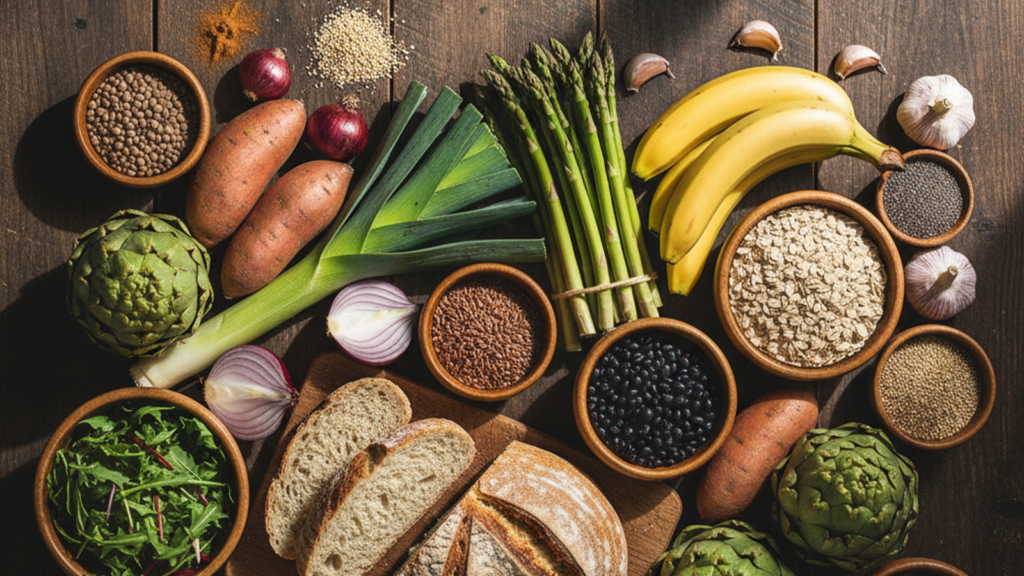
- Chicory root: Contains inulin, a powerful prebiotic that stimulates the growth of healthy bacteria. It improves digestion, supports bowel regularity, and reduces harmful bacteria.
- Garlic: Rich in fructooligosaccharides (FOS) that feed good bacteria. It enhances immunity, reduces inflammation, and boosts beneficial microbes.
- Onions: High in inulin and FOS; promotes growth of healthy gut bacteria. It aids digestion, reduces harmful bacteria, and supports overall gut health
- Leeks: Gentle fiber source that feeds good bacteria. It enhances digestion, maintains microbiome balance, and supports regular bowel movements.
- Asparagus: Contains inulin to fuel beneficial bacteria. It improves digestion, strengthens gut flora, and helps maintain bowel regularity.
- Bananas (slightly green): Rich in resistant starch that feeds good gut microbes. It supports digestion, nourishes bacteria, and aids gut motility.
- Oats: High in beta-glucan, a prebiotic fiber that stimulates good bacteria. It promotes healthy digestion, reduces inflammation, and supports bowel health.
- Apples: Contain pectin, a natural prebiotic that feeds beneficial microbes. It improves gut function, supports digestion, and boosts microbiome diversity.
- Flaxseeds: Rich in soluble fiber that nourishes healthy gut bacteria. They support digestion, maintain bowel regularity, and strengthen gut flora.
- Jerusalem Artichoke: Extremely high in inulin; excellent for promoting healthy gut microbes. It aids digestion, supports bowel movements, and strengthens the microbiome.
Top Probiotic Foods and Their Benefits:
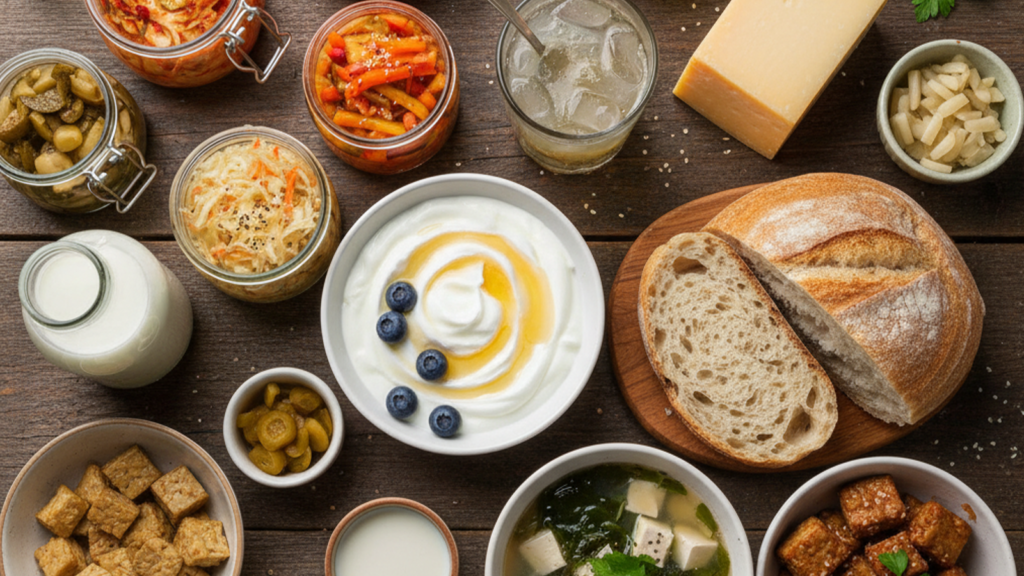
- Yogurt/ Curd: Contains live cultures like Lactobacillus and Bifidobacterium. It restores gut balance, improves digestion, and supports immunity.
- Buttermilk (Traditional): Fermented drink with live cultures. It promotes digestion, supports gut flora, and aids nutrient absorption.
- Kefir: Fermented milk drink rich in diverse bacterial strains. It enhances gut flora, improves nutrient absorption, and boosts digestion.
- Kimchi: Fermented vegetables loaded with probiotics. It strengthens gut bacteria, supports digestion, and reduces harmful microbes.
- Sauerkraut: Fermented cabbage with live bacteria. It promotes healthy gut flora, improves digestion, and supports immunity.
- Kombucha: Fermented tea containing live bacteria and yeast. It helps maintain gut balance, supports digestion, and aids detoxification.
- Tempeh: Fermented soybean product with probiotics. It nourishes gut bacteria, supports digestion, and provides plant-based protein.
- Naturally Fermented Pickles: Contain live bacteria that improve gut health. They support digestion, enhance microbiome diversity, and maintain gut balance.
- Miso: Fermented soybean paste rich in probiotics. It promotes a healthy microbiome, aids digestion, and strengthens gut flora.
- Cottage Cheese (Fermented): Mild probiotic source that nourishes gut bacteria. It improves digestion, supports microbiome health, and provides protein.
Conclusion:
Your gut is the foundation of your overall health and well-being. Incorporate gut-friendly foods in your daily diet along with a healthy, active lifestyle. Stay away from habits like consumption of processed food, poor sleep and excessive stress that negatively impacts your gut health.

