
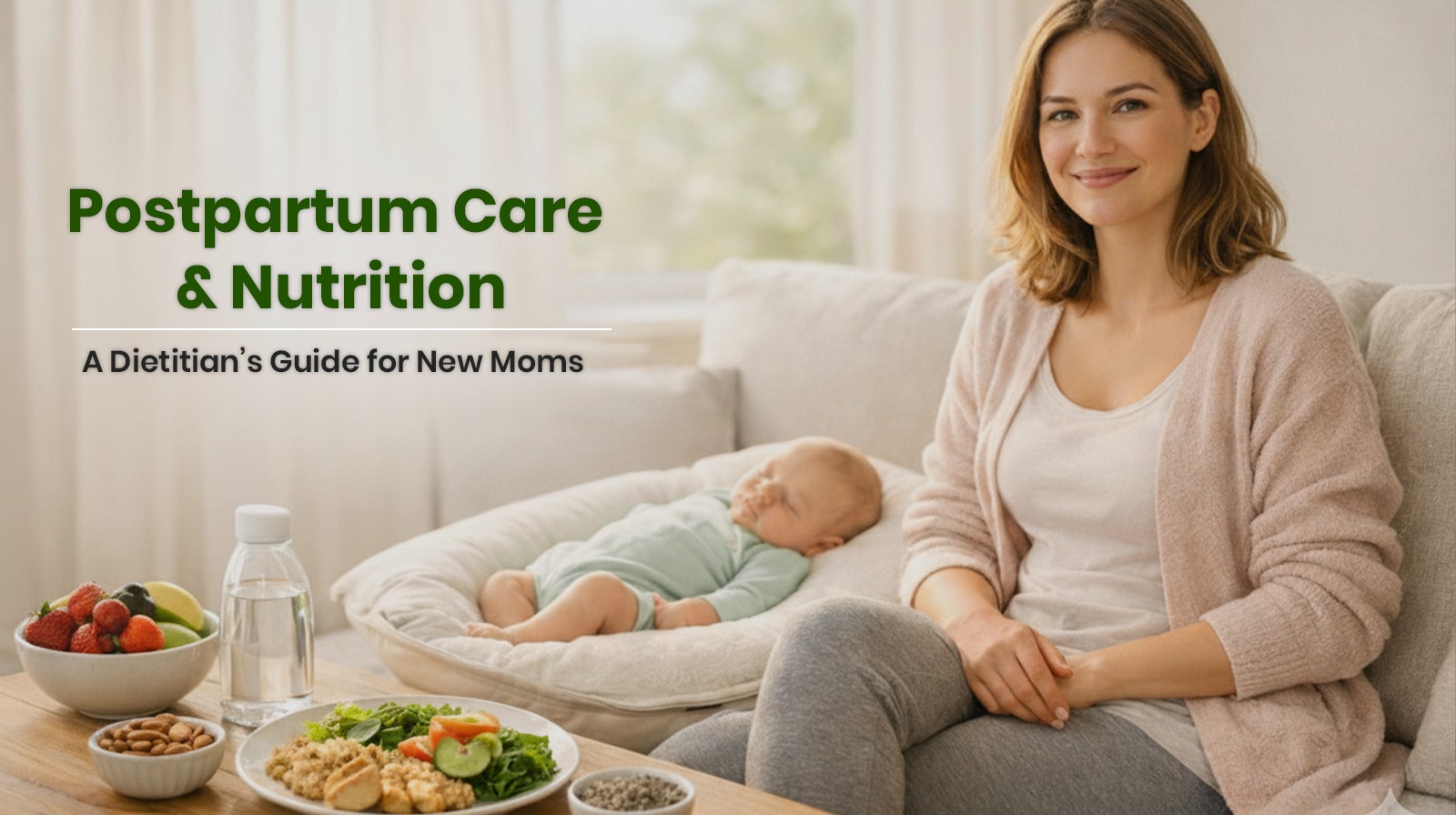
The postpartum period is crucial for both mother and infant as
additional maternal nutrition needs to support the needs of self
and that of an infant in the form of adequate breastfeeding. The
dietary choices of women during the postpartum period were
heavily influenced by traditional cultural beliefs surrounding
these periods. After childbirth, a mother’s body undergoes
immense physical and hormonal changes while simultaneously
adapting to the demands of newborn care. This blog serves as a
practical guide for new moms, highlighting the importance of
postpartum nutrition, recovery, and self-care. Designed by a
dietitian’s perspective, it emphasizes nourishing the body,
supporting healing, boosting energy, and promoting overall
well-being during the fourth trimester.
INTRODUCTION
The postpartum period is crucial for both mother and infant as
additional maternal nutrition will support the needs of self and
that of an infant in the form of adequate breastfeeding. The
nutrition of a postpartum woman will also affect the intellectual
function of the newborn. Although a malnourished mother can
breastfeed her infant, she does it at cost of her own health. Poor
nutrition during breastfeeding makes it more challenging for
mothers to replenish their nutrient stores and meet their
additional dietary needs. Women’s intake should be increased
to cover the energy cost of lactation by about 10% if the woman
is sedentary, but 20% or more if she is moderately or very
active. Requirements of many micronutrients increase in
lactation compared to pregnancy. Virtually all dietary
restrictions should be avoided. The effect of cultural norms,
beliefs, and restrictions on the nutritional status of women
should not be underestimated. The dietary choices of women
during the postpartum period may be heavily influenced by
traditional cultural beliefs surrounding these periods. Not many
studies were performed to analyse the nutritional practices of
women in the postpartum period. So, this study has been
undertaken to explore the various nutritional practices of
mothers during the postpartum period.Childbirth does not mark
the end of a woman’s health journey, it marks the beginning of
a new phase called the postpartum period or the fourth
trimester. This phase typically lasts up to six weeks but, in
reality, recovery can extend for several months. New mothers
often prioritize their baby’s needs while neglecting their own
nutrition and rest. However, proper postpartum care is essential
not only for physical healing but also for mental health,
hormonal balance, and successful breastfeeding. With the right
nutrition and lifestyle support, mothers can regain strength,
prevent deficiencies, and adapt better to motherhood. The
postpartum phase, often called the fourth trimester, is a
sensitive yet powerful period in a woman’s life. While the focus
naturally shifts to the newborn, a mother’s health and nutrition
are equally important. Proper postpartum care helps restore
strength, prevent nutrient deficiencies, and support emotional
stability.
As a dietitian, I believe postpartum nutrition should be simple,
nourishing, and culturally appropriate, rather than restrictive or
focused on quick weight loss.
Why Postpartum Nutrition Matters
Postpartum nutrition plays a vital role in:
• Healing tissues after delivery
• Restoring nutrient stores lost during pregnancy
• Supporting breast milk production
• Preventing fatigue, hair fall, and mood swings
• Enhancing immunity and energy levels
A well-balanced diet during this phase is not about rapid weight
loss but about recovery, nourishment, and sustainability.
Key Nutrients Every New Mom Needs
1. Protein:
Supports tissue repair, muscle recovery, and breast milk
production.
Sources: Eggs, dairy, pulses, legumes, tofu, paneer, nuts, seeds
2. Iron:
Prevents postpartum anaemia and fatigue.
Sources: Green leafy vegetables, dates, raisins, legumes,
jaggery, iron-fortified foods
3. Calcium & Vitamin D:
Essential for bone health, especially for breastfeeding mothers.
Sources: Milk, curd, paneer, sesame seeds, sunlight exposure
4. Healthy Fats:
Support hormonal balance and brain health.
Sources: Nuts, seeds, ghee (in moderation), avocado, coconut
5. Fiber:
Aids digestion and prevents constipation, a common
postpartum issue.
Sources: Fruits, vegetables, whole grains, oats, flaxseeds
Hydration: An Often-Ignored Essential
Adequate fluid intake is crucial, especially for breastfeeding
mothers. Dehydration can lead to fatigue, headaches, and
reduced milk supply.
Tips:
• Drink warm water throughout the day
• Include soups, herbal teas, and coconut water
• Limit caffeinated drinks
Traditional Indian Postpartum Foods
Many traditional Indian foods naturally support recovery:
• Moong dal khichdi – Easy to digest and nourishing
• Vegetable soups and rasam – Hydrating and light
• Warm milk with nuts – Supports strength and sleep
• Dry fruits ladoos (limited quantity) – Energy boost
• Jeera, ajwain, fenugreek – Aid digestion and lactation
These foods should be consumed based on individual tolerance
and health condition.
Postpartum Self-Care Tips
• Prioritize rest and sleep
• Practice gentle movement after medical clearance
• Avoid comparing your recovery with others
• Seek emotional support when needed
• Do not follow food myths or restrictive diets
Conclusion
Postpartum nutrition is not about perfection, it is about
nourishing the body with care and patience. A balanced diet,
adequate hydration, and emotional support can significantly
improve recovery and quality of life for new mothers. Eating a
healthy, balanced diet is essential for mothers who have
recently given birth. It can help them to recover from labour
and the birthing process, gain energy, and regain their pre-
pregnancy figure. New mothers should pay particular attention
to eating nutritious meals, getting plenty of rest and exercise,
drinking enough water each day, and seeking support from
family members or healthcare professionals if they feel
overwhelmed. With these tips in mind, new moms can make
sure that they are doing everything they can to take care of
themselves postpartum.
As a dietitian, my goal is to guide mothers toward sustainable,
culturally rooted, and practical nutrition that supports both
mother and baby. A healthy mother lays the foundation for a
healthy family.

