
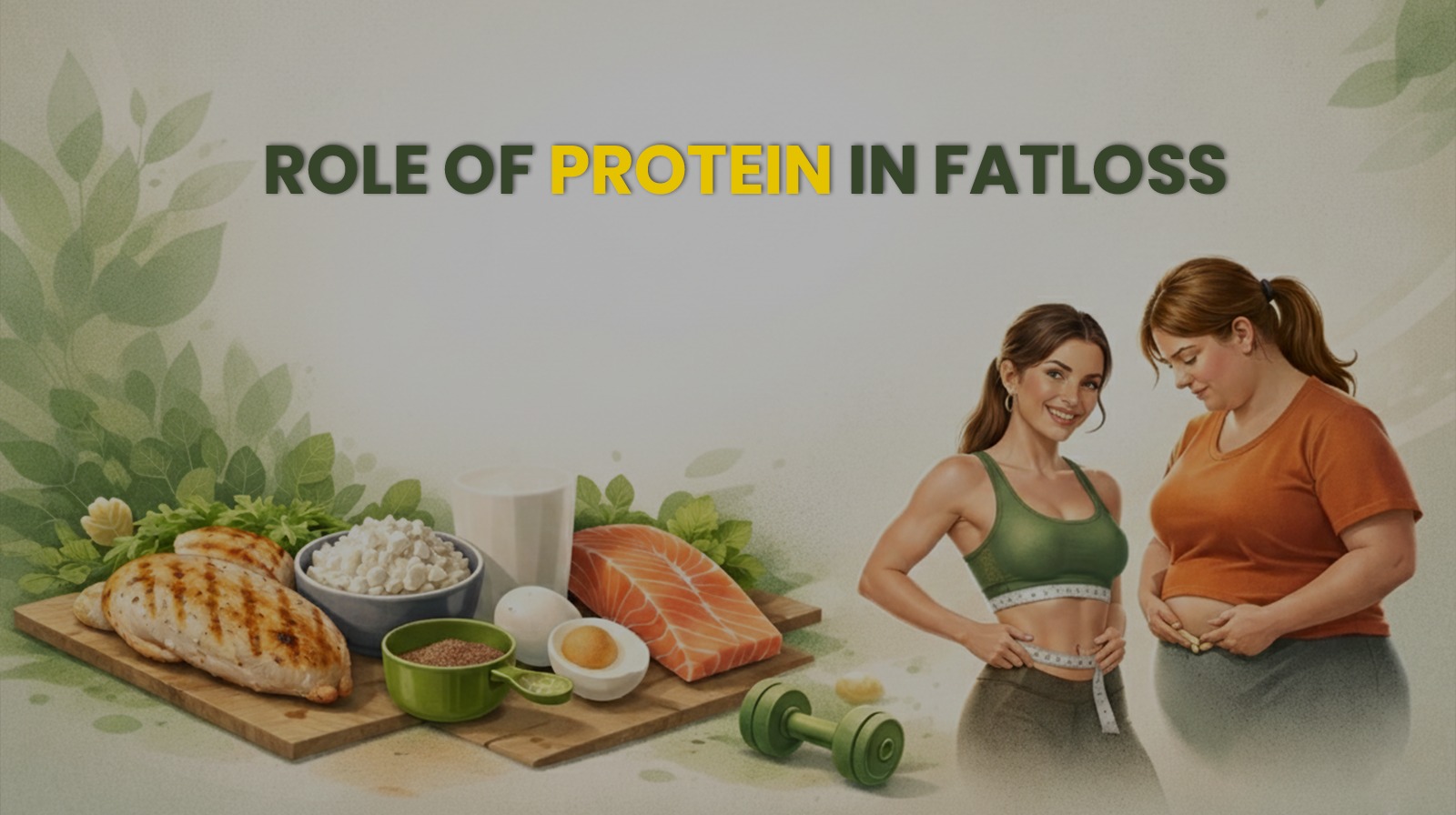
Protein is one of the three components of micronutrients which includes carbohydrates and fats. It consist of 20 amino acids and boosts muscle growth and maintenance in our body. Obesity is a major issue in today’s world and along with workout and diet , protein intake is very important for weightloss
HOW PROTEIN HELPS IN WEIGHTLOSS
- Increase satiety
Protein affects hunger hormones such as chrelin decreases causing reducing hunger . Peptide YY , GLP 1 and cholecystokinin send signal to the brain that decreases hunger .
- Prevent muscle loss
Muscle loss increases during weightloss due to constant breaking down and rebuilding. Protein provides amino acids that is required to repair and maintain muscle tissue. Enough protein helps to maintain strength to perform exercise.
- Keep blood sugar balanced
Without protein, carbohydrates breakdown easily and causes insulin spike . When protein is consumed with or without carbohydrates , it slows digestion and and prevents rapid sugar spike .
- Burn more calories
Protein intake burn more calories by increasing thermic effect of food and increase breakdown of calories .
- Improves fat loss
High protein enhance fat oxidation by lowering insulin and preserving muscle . This makes the body using more fat for fuel purpose .
PROTEIN SOURCES
Animal sources include meat , fish , shellfish , egg , milk and diary products . Animal protein is high in lean meats and fewer in organ and processed meats.
Plant sources include legumes , soy and soy products, nuts , whole grains . Protein absorption is higher from animal sources than plant sources .
CONCLUSION
Protein plays a major role during weightloss process. It helps by reducing hunger and increasing satiety in the body. Protein helps to maintain muscle strength and increases fat loss by burning more calories but retaining muscle mass. Protein intake is higher from animal sources than plant sources .

